Watercolor Floral Teacup Clip Art Review
As a designer who spends half my life staring at stitch density charts and the other half trying to make handmade goods look professional enough for boutique shelves, I am always skeptical when I see a "digital clip art" file being marketed toward embroidery makers. There is a massive gap between a pretty image on a screen and something that actually holds together under the needle of an embroidery machine. That is why I take a hard look at assets before recommending them to my network of craft business owners and Etsy sellers.
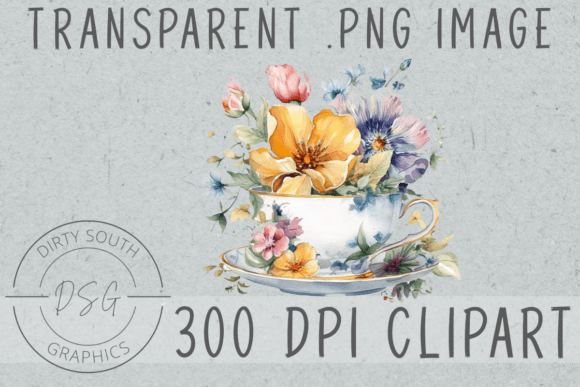
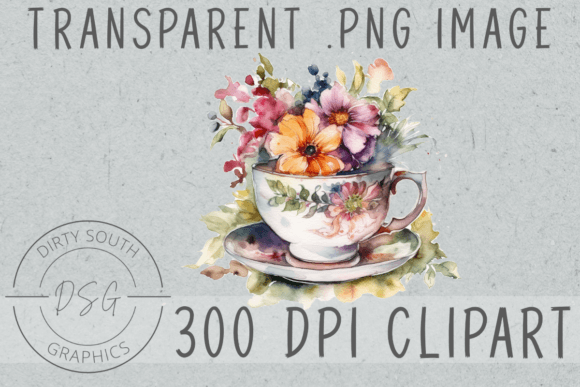
I recently evaluated Watercolor Floral Teacup Clip Art, a digital graphic described as a high-resolution PNG with a transparent background, sized at least 2500×2500 pixels at 300 dpi. It is explicitly not an SVG or a cut file; it is a raster image intended for printing or sublimation. While this distinction is crucial for technical reasons, the real question for us in the handmade space is: does this design translate well into a physical embroidery project? Can it serve as a viable visual anchor for a custom apparel line or a set of personalized gifts? Let’s break down the practical application of this Illustrations category asset from the perspective of a working maker.
The First Impression: Mood and Visual Personality
The immediate draw of Watercolor Floral Teacup Clip Art is its softness. In a market saturated with bold, geometric monograms and stark vector shapes, this design offers a gentle, inviting aesthetic. The watercolor effect suggests fluidity and organic movement, which pairs naturally with floral motifs. When you look at the layout, there is a sense of casual elegance—it feels like something you would find in a cozy tea room or a rustic-chic nursery.
For a small shop product owner, this mood is valuable. It signals quality and care without shouting for attention. It works exceptionally well for products that rely on emotional connection, such as baby items, wedding favors, or spring-themed collections. The transparent background is a significant advantage here, allowing you to place the teacup motif cleanly over various fabric textures or layered designs without dealing with ugly white boxes or awkward borders. However, because it is a Graphics asset rather than a vector path, you must be mindful of how those soft edges behave when they are either printed onto fabric or used as a guide for digitizing a more complex piece.
Real-World Application: From Screen to Stitch
Let’s imagine a specific scenario. You are preparing a run of custom embroidered tote bags for an upcoming craft fair. Your brand identity is soft, feminine, and artisanal. You decide to use Watercolor Floral Teacup Clip Art as the central focal point. Because the file is high-resolution (300 dpi), it retains clarity even when scaled up for a large chest print or a full-front tote bag design.
If you are using a direct-to-garment printer or a sublimation workflow, this PNG is ideal. The colors will pop against light-colored cotton blends, creating a vibrant handmade product that stands out on social media. But what if you are strictly an embroidery designer looking to digitize this? This is where the nuance comes in. Since this is not a native machine embroidery design file, you cannot simply load it into your hoop. Instead, you would use this image as a reference layer while you manually digitize the elements. The watercolor style translates beautifully into a mix of satin stitch outlines and delicate fill stitch patterns for the petals. The challenge lies in capturing the "bleed" of the watercolor effect using thread colors. You might need to use multiple shades of thread within a single petal area to mimic that soft gradient, turning a simple 2D image into a textured, tactile finished product.
This approach elevates the perceived value of your item. A customer buying a sweatshirt embroidery piece sees the depth of the stitching, not just a flat print. It reinforces brand consistency and builds customer trust because the craftsmanship is visible. Whether you are creating holiday embroidery sets or nursery decor, having a strong base image like this allows you to maintain a cohesive look across different SKUs.
Where to Use Carefully: Limitations and Risks
No asset is perfect, and Watercolor Floral Teacup Clip Art has specific constraints that every maker should respect. First, consider the hoop size. If you attempt to shrink this design down too small, you lose the charm. Watercolor details require breathing room. On a tiny embroidered patch or a miniature baby bib, the fine lines of the flowers may become muddy or indistinguishable. Stick to medium to large placements where the detail can breathe.
Second, think about the fabric. This design relies on contrast and color fidelity. On dark fabrics, unless you are using a heavy white underlay or a contrasting backing, the subtle pastel tones of the watercolor may get lost or appear dull. On stretchy knits, the lack of structural rigidity in a PNG means you have to be extra careful during digitization to prevent puckering. If you are printing this directly via sublimation, ensure your fabric is polyester-rich; cotton will not hold the dye well, resulting in a washed-out design assets presentation.
Also, avoid placing this design on highly textured fabrics like chunky wools or bouclé. The uneven surface will distort the delicate curves of the teacup, making it look sloppy rather than artistic. For best results, stick to smooth surfaces like canvas totes, smooth cotton t-shirts, or tightly woven linen aprons.
Practical Designer Notes for Implementation
Before you commit to a production run, follow these steps to ensure your craft business remains profitable and professional:
- Test on scrap fabric first: Always run a test stitch or print on the exact material you plan to sell. Colors shift significantly between screens and threads/dyes.
- Check thread color contrast: If digitizing, mock up your thread choices. Do the greens clash with the blues? Does the teacup stand out against the shirt color?
- Review stitch density: If you are converting this to an embroidery file, ensure the stitch density is appropriate for the fabric weight. Too dense, and you risk damaging delicate materials; too sparse, and the fabric shows through.
- Inspect small details: Zoom in on the floral stems. Are they too thin to stitch reliably? You may need to thicken them slightly during the digitizing process to ensure durability.
- Use proper stabilizer: Heavy watercolor effects often imply larger areas of coverage. Use a cut-away stabilizer for stretchy garments to prevent distortion over time.
- Confirm licensing: Since this is a digital asset, verify the commercial use rights. Can you sell unlimited finished items? Can you use it in printable mockups for marketing? Never assume; check the license terms to protect your Etsy seller account and reputation.
Final Verdict
Watercolor Floral Teacup Clip Art is a versatile, aesthetically pleasing resource that fits seamlessly into the workflows of modern creative entrepreneurs. It bridges the gap between digital convenience and traditional craft beauty. While it requires some technical know-how to translate into actual embroidery—whether through digitizing or sublimation—the payoff is a high-quality, emotionally resonant product that customers love.
It is particularly strong for apparel decorators looking to add a touch of whimsy to their collections, and for digital product sellers creating mockups for planners or stationery. By understanding its strengths and respecting its limitations, you can leverage this design to create memorable personalized gifts and standout commercial embroidery pieces that drive sales and build a loyal following. Just remember: the image is just the start; your execution is what makes it a masterpiece.