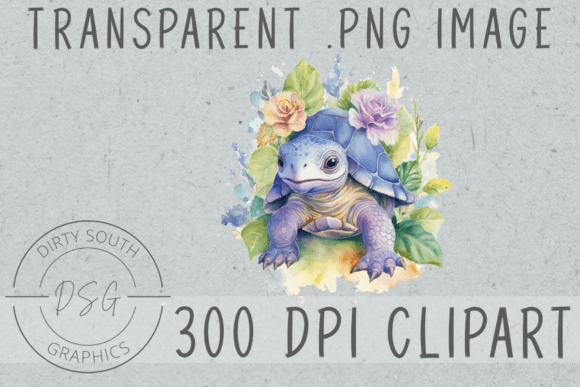
Watercolor Floral Turtle Clip Art Review
As a designer who spends more time than I care to admit staring at stitch grids and thread spools, I have learned that not all digital assets translate well to the hoop. There is a distinct gap between a beautiful Illustrations category listing and a viable machine embroidery design. Today, I am evaluating a specific asset: Watercolor Floral Turtle Clip Art. This is not a vector file you can push through a cutter; it is a high-resolution PNG Image, specifically noted as 300 dpi with a transparent background. For those of us in the craft business looking to create tangible handmade product lines, understanding how this Graphics type behaves before stitching is critical.
The First Impression: Mood and Visual Personality
When you first load Watercolor Floral Turtle Clip Art into your design software, the immediate takeaway is its softness. The watercolor aesthetic brings a gentle, organic feel that stands in stark contrast to the rigid geometry often found in standard clip art. The turtle motif is approached with a whimsical, artistic flair rather than a cartoonish one. This matters immensely when you are aiming for a boutique aesthetic.
The visual personality here is calm and inviting. It does not scream for attention; instead, it whispers. This makes it an excellent candidate for projects where subtlety is key. However, as any experienced embroiderer knows, "soft" on a screen can easily become "muddy" under a needle. The watercolor effect relies on gradients and color bleeding that must be carefully interpreted by your digitizer or translation process. If you are planning to use this as a direct print-to-embroidery transfer or tracing reference, you need to appreciate that the stitch density will need to be managed carefully to preserve the delicate edges of the floral elements surrounding the turtle.
Real-World Application: The Custom Tote Bag Scenario
Let’s imagine a real-life scenario. You are preparing inventory for an upcoming craft fair or updating your Etsy shop. You decide to create a custom embroidered tote bag line targeting young mothers or nature enthusiasts. You choose Watercolor Floral Turtle Clip Art for the central motif. Why? Because it bridges the gap between playful and sophisticated.
On a canvas tote, this design would likely perform exceptionally well. The natural texture of the fabric complements the watercolor style. However, you must consider placement. A large, detailed center print might overwhelm a smaller bag, while a small chest pocket placement might lose the intricate floral details. In my experience, placing this design on the front panel of a structured tote allows the eye to travel across the composition without getting lost in the weave of the fabric. The result is a personalized gift that feels curated and expensive, rather than mass-produced.
Similarly, for sweatshirt embroidery, this design offers a nice break from typical block-letter logos. It adds a layer of comfort and warmth to the garment. When a customer sees a soft, floral turtle on a cozy hoodie, they perceive value. It suggests that the maker put thought into the aesthetic, not just the function. This perception directly impacts buyer engagement and justifies a higher price point for your small shop product.
Technical Considerations for Embroidery Translations
Since this is a PNG Image and not a native digital embroidery file, you are likely dealing with a raster image that needs to be converted or used as a guide. Here is where the rubber meets the road. The description confirms it is suitable for printing, which opens up sublimation possibilities, but for traditional machine embroidery, you must be cautious.
- Stitch Density: Watercolor styles often imply low-density fill stitches or even satin stitches to mimic brush strokes. If you set the density too high, you risk puckering the fabric, especially if you are working on lightweight materials. Conversely, if the density is too low, the underlying fabric may show through, ruining the clean look of the finished product.
- Thread Colors: The original graphic has a transparent background, which is helpful. However, you must select thread colors that replicate the subtle shifts in the watercolor pigments. Using standard primary colors will make the design look flat and cheap. You need variegated threads or careful color matching to achieve the intended effect.
- Hoop Size: Always confirm the hoop size required for your final stitched version. While the source image is at least 2500×2500 pixels, the physical dimensions depend on your machine's settings. Ensure your chosen garment fits within your machine's maximum hooping area without requiring excessive re-hooping, which can lead to registration errors.
Where to Use With Caution
Not every surface is a friend to this design. Watercolor Floral Turtle Clip Art should be used carefully on textured fabrics like heavy denim or bouclé, as the texture can obscure the fine details of the floral borders. Similarly, avoid using this on thin or stretchy fabrics unless you are employing a robust stabilizer system. The weight of the thread could cause distortion over time.
I also advise against using this design for tiny lettering or very small decorative accents. The watercolor style loses its charm when scaled down too far. If you are creating an embroidered patch or a small logo for a corporate cap, this design might lack the punch needed for instant recognition. It shines best in medium to large formats where the viewer has time to appreciate the nuance of the art.
Impact on Brand Consistency and Customer Trust
In the world of Etsy seller operations and commercial embroidery, consistency is king. Using a cohesive visual language across your products builds brand trust. Watercolor Floral Turtle Clip Art fits seamlessly into a brand identity centered around nature, gentleness, and artisanal quality. It signals to the buyer that you care about aesthetics. When a customer receives a holiday gift or a baby embroidery item featuring this design, they are more likely to share it on social media because it looks professional and intentional.
This visual appeal translates directly to product value. A well-executed applique design or a cleanly stitched fill stitch based on this graphic elevates a simple cotton shirt into a statement piece. It reduces the likelihood of returns due to "poor quality" because the design itself carries an air of craftsmanship.
Practical Designer Notes Before You Stitch
Before you commit this design to a production run, follow these practical steps:
- Test on Scrap Fabric: Never assume a design will work perfectly on your final material. Test it on a scrap piece of the same fabric type to check for puckering or color mismatch.
- Check Contrast: Inspect the design in black and white mockups. Does the turtle stand out against the flowers? Is there enough contrast between the subject and the background elements?
- Review Small Details: Zoom in on the digital file. Are there tiny details that might get lost in the stitching process? Simplify if necessary.
- Confirm Licensing: Since this is a design asset, ensure you have the correct commercial license if you plan to sell the finished items. Do not assume that purchasing the graphic grants unlimited rights.
- Use Proper Stabilizer: Depending on your fabric, use cut-away or tear-away stabilizers to support the running stitch and satin stitch areas.
In conclusion, Watercolor Floral Turtle Clip Art is a versatile and charming asset for designers who understand the nuances of translating raster images into textile art. It is not a plug-and-play solution, but with careful planning regarding stitch density, thread colors, and fabric choice, it can produce stunning custom apparel and gift items that resonate with customers. Treat it with respect, test thoroughly, and it will serve your creative entrepreneur goals well.